Introduction
Air fryers have become a staple in many kitchens over the past several years, and for good reason. They offer a different approach to cooking that appeals to people looking for faster meal preparation and texture variations in their cooking. The Ninja Air Fryer Pro, specifically the AF141 model with its 5-quart capacity, represents one of the options available in the mid-to-large size range of air fryer appliances.
Understanding what an air fryer can and cannot do, and how a specific model functions, helps people make informed decisions about whether this type of appliance aligns with their cooking habits and kitchen space. This article explores the features, capabilities, and practical applications of this particular model in depth, examining what makes it distinctive and how it might fit into various cooking scenarios.
Rather than focusing on marketing claims or personal endorsements, we’ll look at what the specifications tell us about the appliance’s capabilities, how the various functions work, and what kinds of cooking tasks it’s designed to handle.
What Is an Air Fryer and How Does It Work?
Before diving into the specifics of any particular model, it helps to understand the basic mechanics of air fryer technology. An air fryer is essentially a compact convection oven that circulates hot air at high speeds around food. This rapid air circulation creates a cooking environment where the exterior of food browns and crisps while the interior cooks through.
The Maillard reaction—the chemical process that occurs when proteins and sugars heat to certain temperatures—produces the browning and crisping that many people associate with deep-fried foods. Air fryers achieve this effect using significantly less oil than traditional frying methods, which is why they gained popularity as people sought alternatives to conventional deep frying.
The basic components that make this possible include a heating element, a fan for air circulation, a cooking chamber, and a basket or tray where food is placed. Temperature control and timing mechanisms allow users to adjust these variables for different cooking tasks.
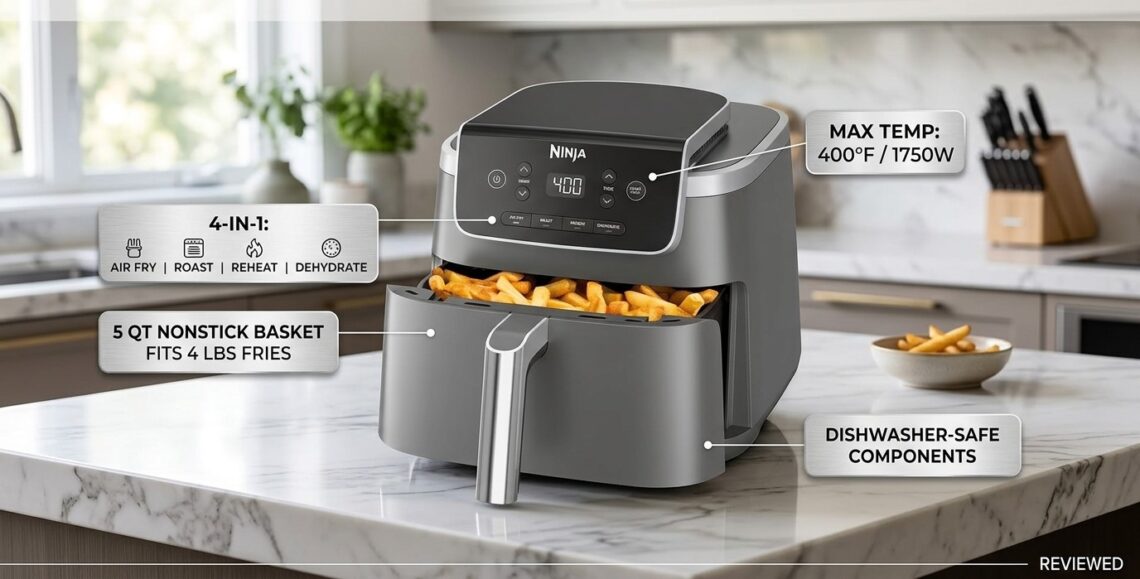
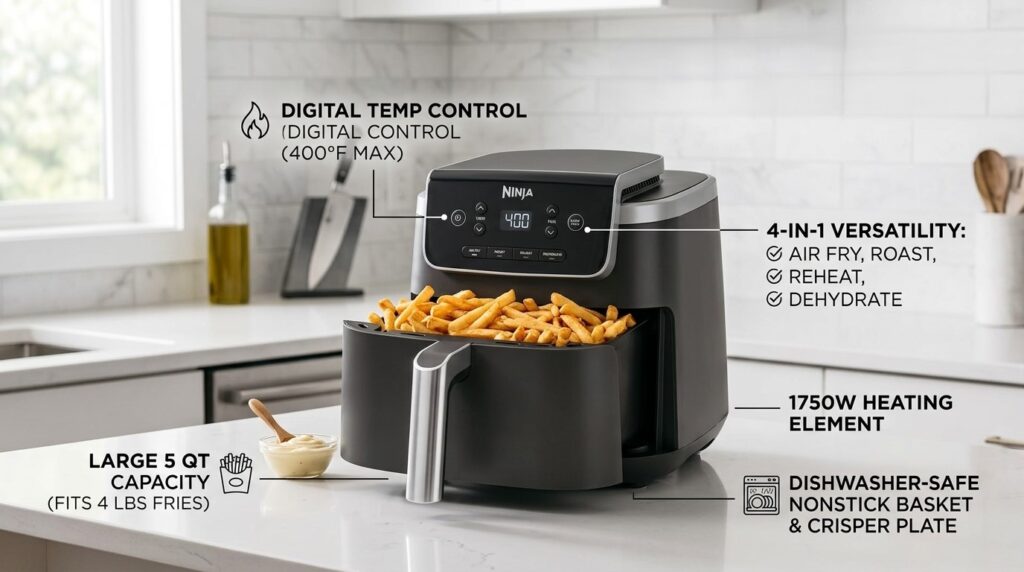
The AF141 model uses a 1750-watt heating element and reaches maximum temperatures of 400°F. This wattage and temperature range place it in the range of what most air fryers offer, though the specific engineering and airflow design of individual models can produce different results even at similar specifications.
Key Features and Specifications of the AF141 Model
The Ninja Air Fryer Pro AF141 includes several notable features that define its capabilities. Understanding what each specification means helps clarify what the appliance can do and what to expect from it.
Capacity and Dimensions
The 5-quart cooking chamber represents a mid-to-large size in the air fryer market. To put this in perspective, a quart of volume equals roughly four cups, so a 5-quart basket holds approximately 20 cups of space. For context, this capacity is sufficient to cook approximately four pounds of french fries in a single batch, according to specifications. This size allows for cooking meals for multiple people at once, though the actual amount of food that fits depends on the shape and density of what you’re cooking.
Capacity matters because it determines whether you’re cooking for one person, a family, or whether you need to prepare food in multiple batches. Smaller air fryers might hold enough for two people’s meals, while larger models expand the possibilities for batch cooking or meal preparation.
Power and Temperature Range
The 1750-watt power rating determines how quickly the unit heats and how efficiently it maintains temperature during cooking. Higher wattage generally means faster preheating times and more consistent temperature maintenance when multiple items are in the basket. The maximum temperature of 400°F represents a standard ceiling for most air fryer models. This temperature is sufficient for the vast majority of air frying tasks, though some specialty applications might call for higher heat.
The temperature range available allows for versatility in cooking techniques. Lower temperatures work well for gentle reheating or dehydrating, while higher temperatures enable crisping and browning.
Nonstick Basket and Dishwasher Compatibility
The nonstick coating on the cooking basket reduces the need for added oil and makes cleanup straightforward. Over time and with regular use, nonstick surfaces can degrade, but this characteristic is relevant to the initial user experience. The fact that the basket is dishwasher-safe simplifies the cleaning process after use, which is a practical consideration for daily use.
Four Cooking Functions
The AF141 model incorporates four distinct functions: air fry, roast, reheat, and dehydrate. Each function adjusts temperature and air circulation patterns for the specific cooking task. Rather than being entirely separate machines, these functions represent preset configurations and temperature ranges optimized for different purposes.
Exploring Each Cooking Function
Understanding what each function does and when to use it provides insight into the appliance’s versatility.
Air Fry Function
The air fry function is what defines the appliance’s primary purpose. This function uses high-temperature circulating air to cook food quickly while creating a crispy exterior. Foods that work well with air frying include items that would traditionally be deep fried, such as french fries, chicken wings, onion rings, and breaded items. The function also works with items that aren’t traditionally fried but benefit from high-heat cooking, like certain vegetables or protein preparations.
Air frying typically requires little to no oil, though adding a small amount can enhance browning. The cooking times are generally shorter than conventional oven cooking due to the concentrated heat and air circulation. Depending on the food item and thickness, air frying often takes one-quarter to one-half the time of traditional oven cooking.
Roast Function
Roasting is a cooking method that uses dry heat to cook food, often at moderate to high temperatures. The roast function on the AF141 adjusts temperature and air circulation to suit this cooking style. Foods suitable for roasting include vegetables, whole or cut into pieces, chicken breasts or thighs, and other proteins. Roasting allows for browning and development of flavors through the Maillard reaction while cooking food through to the center.
The roast function differs from air frying primarily in the temperature settings and airflow patterns. Roasting typically occurs at slightly lower temperatures and with different timing cycles than air frying.
Reheat Function
Reheating leftover food in an air fryer tends to restore crispiness better than microwave reheating, which can result in sogginess. The reheat function uses lower temperatures and adjusted timing to warm food without overcooking it. This function applies to items like pizza, french fries, fried chicken, or other foods that benefit from restored texture.
This function represents a practical daily use case, as many households have leftover food regularly. The ability to reheat while maintaining texture quality offers an advantage over microwave reheating for certain foods.
Dehydrate Function
The dehydrate function circulates air at lower temperatures for extended periods, removing moisture from food. This function enables making dried herbs, beef jerky, dried fruit chips, or vegetable crisps. Dehydrating typically involves much longer cooking times than other functions, often several hours, as the goal is to remove moisture without cooking the food.
Home dehydration opens up possibilities for food preservation and creating specific snack items. While dedicated dehydrators exist for this purpose, the inclusion of this function in a multi-function air fryer makes it possible to experiment with dehydration without purchasing additional equipment.
Practical Uses and Meal Ideas
Beyond understanding the technical specifications, exploring how the AF141 might be used in actual cooking scenarios illustrates its practical value. Different cooking styles and household situations benefit from this appliance in different ways.
Weeknight Dinner Preparation
For families preparing weeknight dinners, the speed and capacity of the AF141 can simplify meal preparation. A chicken breast and a tray of vegetables can cook simultaneously in about 15-20 minutes at air fry temperatures, providing a complete meal faster than traditional oven cooking. The 5-quart capacity accommodates a reasonable portion for a family of four without requiring multiple batches for components.
Side dishes like roasted Brussels sprouts, broccoli, or sweet potato wedges work well in the roast function, and these items often cook in less time than they would in a conventional oven.
Meal Prep and Batch Cooking
People who prepare meals in advance can use the AF141 for batch cooking protein and vegetables. The capacity allows for preparing portions for several days in a single cooking session. Cooked chicken thighs, roasted vegetables, and other prepped components can be portioned and stored for use throughout the week.
The efficient cooking times mean that batch cooking sessions take less time overall compared to using a conventional oven, which might allow you to heat only one component at a time.
Crispy Texture Requirements
Items that need to be crispy—whether that’s french fries, potato wedges, breaded chicken, or vegetable chips—often turn out better in an air fryer than in a conventional oven. The high-heat circulating air creates texture that’s closer to deep-fried items without the oil involved in traditional frying.
This capability makes it possible to achieve the textural characteristics that make certain foods satisfying without the mess and oil usage of deep frying.
Snack and Appetizer Preparation
Party planning or casual entertaining sometimes calls for foods that benefit from air frying. Chicken wings, spring rolls, mozzarella sticks, and other appetizers that benefit from crisping and quick cooking are suitable for this appliance.
The 5-quart capacity allows for preparing a reasonable quantity of appetizers without excessive batching, though multiple batches might still be necessary for large gatherings.
Dehydration Projects
Gardeners with excess produce or people interested in creating homemade jerky or dried fruit chips can use the dehydrate function for these purposes. This is particularly useful for preserving seasonal produce or creating specific snack items that might otherwise be expensive to purchase.
Texture Restoration and Reheating
The reheat function fills a practical need that most households encounter regularly. Leftover pizza, fried chicken, or french fries reheat better in an air fryer than in most other appliances, restoring crispiness that microwave reheating typically destroys.
Who Might Find This Appliance Suitable
Different households and cooking situations have different needs. Considering whether an air fryer aligns with your specific situation helps determine whether it’s a practical addition to your kitchen.
Families of Three to Five People
The 5-quart capacity makes this model suitable for families in the mid-size range. Larger families might find themselves batching frequently, while individuals or couples might find the capacity more than they typically need. For families of three to five preparing weeknight dinners, the capacity often works well.
People with Limited Cooking Time
Those preparing meals quickly benefit from the shorter cooking times that air frying provides. The speed of air frying—often 30-50% faster than conventional oven cooking—appeals to busy households.
Individuals Interested in Cooking Methods Beyond Deep Frying
The multi-function design makes this appliance useful beyond air frying alone. People interested in roasting vegetables, reheating food efficiently, or experimenting with dehydration can leverage these additional functions.
Home Cooks Seeking Texture Variety
Cooking enthusiasts who appreciate the textural qualities that crispy cooking provides—but want to minimize oil usage—find air fryers appealing. The ability to achieve crispy textures without deep frying opens up cooking possibilities.
Apartment Dwellers or Those with Limited Oven Space
In kitchens where oven space is limited or where using a full-size oven is impractical, an air fryer provides an alternative cooking appliance that takes up countertop space rather than oven space.
Those Interested in Food Preservation Through Dehydration
People with gardens, access to fresh produce, or interest in making jerky or dried fruit chips can use the dehydrate function for these projects.
Important Considerations and Limitations
While the AF141 has capabilities that suit many cooking situations, understanding its limitations and practical considerations is important for realistic expectations.
Not a Complete Cooking Solution
An air fryer, even a multi-function model, doesn’t replace all cooking appliances. It doesn’t include boiling or steaming functions, which many people use regularly. Cooking pasta, boiling eggs, or steaming rice requires alternative methods. It’s most accurately viewed as a supplementary appliance that handles certain cooking tasks particularly well, rather than a complete cooking solution.
Cooking Multiple Dishes Simultaneously
While the 5-quart capacity is reasonable for a family meal, cooking multiple components at once is limited. You can fit a protein and vegetables in the basket simultaneously, but adding a starch component might require separate batches. Unlike a conventional oven where multiple trays fit on different racks, air fryer space is more constrained.
Learning Curve for New Cooking Method
Air frying produces results that differ from conventional cooking methods. Food texture, browning patterns, and optimal times and temperatures require some experimentation. Recipes designed for traditional ovens often need adjustment for air fryers. Some trial and error is normal when beginning to use these appliances.
Temperature Limitations
The maximum temperature of 400°F, while sufficient for most tasks, might be limiting for certain specialized cooking applications. Extremely high-heat searing or certain baking applications might call for higher temperatures.
Cleaning Considerations
While the basket is dishwasher-safe, the heating element and exterior of the unit require careful cleaning. Food particles or splatters can accumulate in areas of the heating element that aren’t easily accessible. Regular cleaning helps prevent buildup and maintains performance.
Noise Level
Air fryers produce significant noise during operation due to the high-speed fan. Those sensitive to kitchen noise should be aware that using an air fryer produces noticeable sound during cooking cycles.
Storage Space Requirements
A 5-quart air fryer is a countertop appliance that requires dedicated space. It’s not easily stored away when not in use, so kitchen layout and available countertop space are practical considerations.
How Air Fryers Compare to Other Cooking Appliances
Understanding how air fryers compare to other common cooking methods helps contextualize their role in a kitchen.
Air Fryers Versus Conventional Ovens
Conventional ovens heat the surrounding environment, gradually cooking food through ambient heat. Air fryers use concentrated, rapidly circulating hot air. This difference produces shorter cooking times in air fryers and often superior crisping. However, conventional ovens offer more capacity and can accommodate multiple trays simultaneously. Traditional ovens also heat your kitchen more significantly than air fryers, which matters in warm climates or seasons. For energy use, air fryers consume less energy overall due to faster cooking and smaller heating volume.
Air Fryers Versus Deep Fryers
Deep fryers immerse food in hot oil, which conducts heat very efficiently and produces highly crispy results. Air fryers achieve similar textures with minimal oil. Deep fryers create significantly more mess and require oil disposal and management. Air fryers are faster to heat up and don’t produce the lasting oil smell that deep fryers do. For health-conscious cooks, air fryers reduce oil consumption substantially while still producing crispy results.
Air Fryers Versus Microwaves
Microwaves heat food through radiation that excites water molecules, cooking food relatively quickly but rarely producing browning or crisping. Air fryers use hot air circulation, which creates browning and crispy textures that microwaves cannot achieve. Microwaves are faster for simple reheating tasks, while air fryers excel at reheating foods that benefit from texture restoration. Microwaves work better for certain tasks like heating beverages or softening items, while air fryers are superior for foods requiring crispy texture.
Air Fryers Versus Toaster Ovens
Toaster ovens are small convection ovens that cook similarly to conventional ovens but in a smaller space. They’re faster than full-size ovens and take up less room. Air fryers are typically faster still and produce crisper results due to more concentrated heat and air circulation. Toaster ovens offer more cooking versatility, including the ability to hold multiple items or toast items. Air fryers excel specifically at crisping and high-heat cooking. Space and intended use determine which appliance makes more sense for a particular kitchen.
Air Fryers Versus Dehydrators
Dedicated food dehydrators are optimized specifically for the dehydration process, with multiple trays and extended drying times. Air fryers with a dehydrate function can accomplish similar results but typically with less capacity and potentially longer times depending on the amount of food. Those doing extensive dehydration might prefer a dedicated appliance, while casual users might find the multi-function air fryer sufficient.
Frequently Asked Questions
What’s the Difference Between Air Frying and Regular Oven Cooking?
Air fryers use rapidly circulating hot air in a compact space, creating higher air velocity and more concentrated heat around food. Regular ovens heat the surrounding air gradually. This difference produces faster cooking times in air fryers and typically crisper results. Foods that might take 30 minutes in an oven might take 15 minutes in an air fryer. The tradeoff is that conventional ovens offer more capacity and flexibility.
Do I Need to Use Oil in an Air Fryer?
Many foods can air fry without any added oil, as they release their own fats during cooking. However, some foods benefit from a light coating of oil for browning and flavor development. A spray bottle or light brushing with oil often produces better results than no oil at all, though the amount used is far less than traditional frying requires. Dry, lean items sometimes benefit from a small amount of oil for improved texture.
How Do I Know What Temperature and Time to Use for Different Foods?
Most air fryer models include preset temperatures and times for common foods based on the amount and size of the item. Beyond that, recipe resources, experimentation, and observation help determine optimal times and temperatures. Temperature affects browning speed, while time affects doneness. Starting at suggested times and adjusting based on results is a typical approach. The same food item might require slightly different times depending on size, thickness, and starting temperature.
Can I Cook Frozen Food Directly in an Air Fryer?
Yes, many frozen foods can be cooked directly without thawing. Frozen french fries, chicken breasts, and vegetables often cook successfully from frozen, though cooking times might be longer than thawed items. Most frozen foods come with microwave or oven instructions that can be adapted for air frying, though times typically decrease significantly.
What Foods Aren’t Suitable for Air Frying?
Foods with wet batters—like pancake batter or thick cookie dough—don’t work well, as the liquid drops from the basket during cooking. Fresh, delicate herbs or light garnishes can blow around or dry excessively. Foods that require boiling or steaming aren’t appropriate for this cooking method. Foods requiring careful, moist cooking—like certain fish preparations—might not benefit from the high-heat, dry environment.
How Often Do I Need to Clean an Air Fryer?
The basket should be cleaned after each use to prevent food buildup and maintain nonstick performance. The heating element should be wiped regularly to remove splatters. Monthly deeper cleaning of crevices and air vents helps maintain consistent performance. Regular maintenance is simpler than deep cleaning after extended use.
Can I Cook Multiple Items at Different Temperatures Simultaneously?
No, the air fryer cooks at one temperature setting at a time. Multiple items can be in the basket together if they require the same temperature and time, but items needing different conditions require separate batches.
What’s the Actual Cook Time for Items Like Chicken or Vegetables?
Cooking times vary based on size, thickness, starting temperature, and item type. Generally, chicken breasts cook in 12-15 minutes, chicken thighs in 15-18 minutes, and most vegetables in 10-20 minutes. Dense items take longer than lighter items of similar size. Checking items partway through cooking helps determine when they’re done.
Will an Air Fryer Significantly Reduce My Cooking Time Compared to My Conventional Oven?
For most items, air fryer cooking takes 30-50% less time than conventional ovens due to the concentrated heat and air circulation. This translates to meaningful time savings for regular use, particularly for items cooked multiple times per week.
Is It Safe to Leave an Air Fryer Unattended During Cooking?
Air fryers have automatic shutoff features when baskets are removed and include safety features to prevent operation when not properly assembled. However, like any heating appliance, they shouldn’t be left completely unattended for extended periods. Checking on food during cooking is a reasonable practice.
Conclusion
The Ninja Air Fryer Pro AF141 represents a mid-to-large capacity multi-function cooking appliance designed for households looking to expand their cooking methods beyond traditional ovens. The 5-quart capacity, four distinct cooking functions, and efficient heating system make it suitable for families seeking faster meal preparation and textural variety in their cooking.
Understanding what this appliance can and cannot do helps determine whether it fits your cooking style and kitchen setup. It excels at creating crispy textures quickly, reheating food efficiently, and handling batch cooking tasks. It functions best as a supplement to your existing cooking appliances rather than a replacement for them.
The practical applications range from weeknight dinner preparation to batch cooking for meal prep, from reheating leftovers to exploring dehydration projects. Different household situations find different value in this type of appliance depending on family size, available kitchen space, and cooking preferences.
Like any kitchen appliance, successful use involves understanding its capabilities, learning how to adapt recipes and cooking methods to its specific characteristics, and maintaining it properly with regular cleaning. The learning curve is relatively gentle, as air fryers are generally intuitive to operate, though some experimentation with times and temperatures helps optimize results for your preferences.