Introduction
Air fryers have fundamentally changed how many people approach home cooking. In just the past few years, these appliances have moved from trendy kitchen gadgets to practical workhorses that handle everything from weeknight dinners to meal prep sessions. What makes them so appealing is their ability to deliver crispy, well-prepared food with significantly less oil than traditional frying methods, all while maintaining the nutritional profile of the ingredients.
The landscape of air fryer options has expanded considerably. You’ll find compact single-serving models alongside larger countertop units designed for families. Within this diversity sits the Cosori TurboBlaze, a 6-quart air fryer that occupies an interesting middle ground. It’s substantial enough to handle cooking tasks for multiple people, yet remains manageable for most kitchens. This model has gained attention primarily due to its combination of cooking versatility, specific design choices around safety and material composition, and its range of temperature and speed settings.
Understanding whether this particular air fryer aligns with your cooking needs requires looking beyond marketing language. This guide explores what the Cosori TurboBlaze actually offers, how different people might incorporate it into their cooking routines, and what realistic expectations should shape your decision-making process.
Key Features Explained
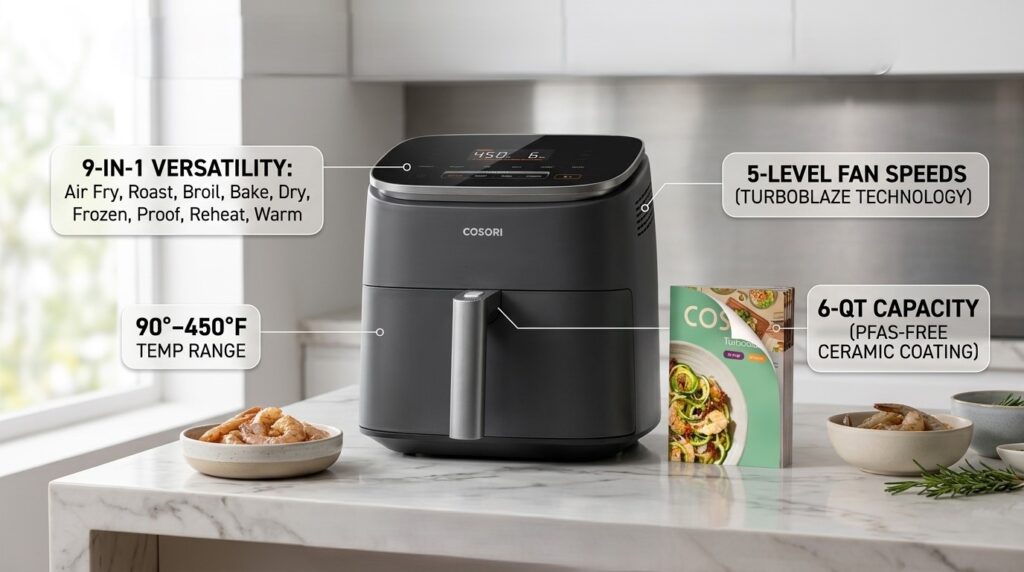
The 6-Quart Capacity
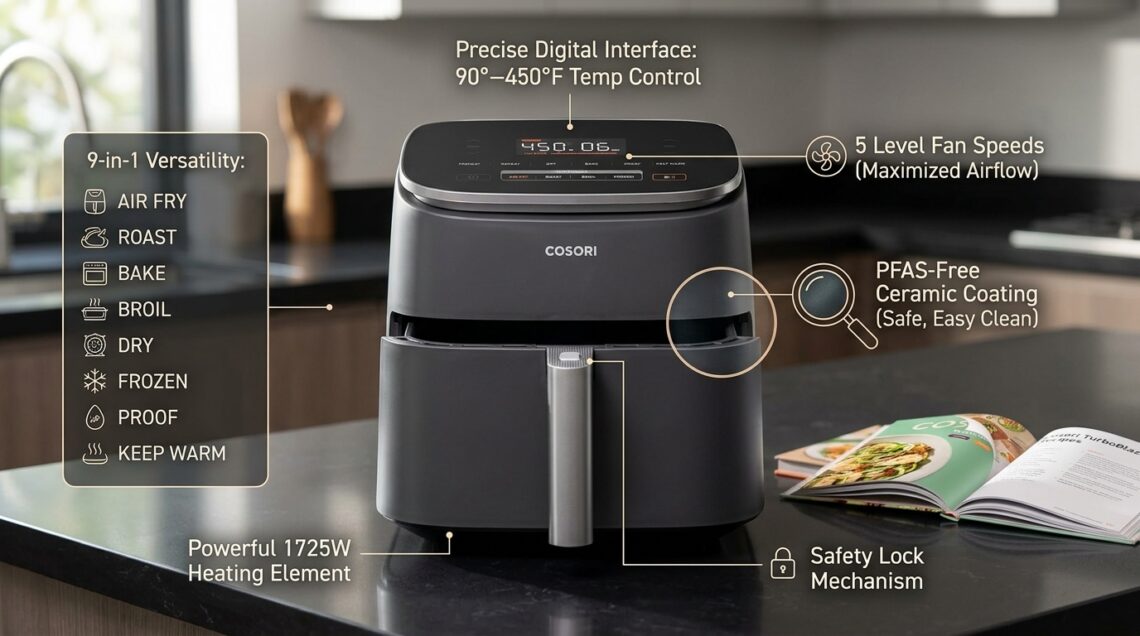
Capacity matters more than many first-time air fryer buyers initially realize. A 6-quart basket translates to roughly 5-6 pounds of food, depending on what you’re cooking. This means you can prepare chicken breasts for four people simultaneously, or handle a substantial batch of vegetables for meal prep without splitting the task across multiple cooking cycles.
The physical dimensions matter too. This size strikes a balance—it’s large enough to be genuinely useful for families or anyone who cooks in batches, but it doesn’t require the counter space that commercial-grade appliances demand. Most standard kitchen counters can accommodate it, though you’ll want to ensure adequate clearance above for steam circulation.
The Ceramic Coating and PFAS-Free Construction
The mention of PFAS-free materials warrants explanation since it’s become increasingly common in cookware discussions. PFAS (per- and polyfluoroalkyl substances) are synthetic chemicals used in nonstick coatings. Some people prefer to avoid them due to health considerations, while others consider them negligible at cooking temperatures. The Cosori TurboBlaze opts for a ceramic-based nonstick surface instead.
Ceramic coatings offer genuine advantages and some trade-offs. They’re generally durable and handle high temperatures well. The nonstick properties work effectively for preventing food from sticking without requiring excessive oil. However, ceramic coatings can be more delicate than traditional nonstick surfaces—they’re more prone to scratching and chipping if metal utensils contact them. Using wooden or silicone utensils extends the coating’s lifespan considerably.
The commitment to PFAS-free materials appeals to a specific segment of consumers who’ve actively considered these chemical compositions in their cookware. Whether this matters to you depends on your personal health priorities and what you’ve researched about the topic.
Temperature Range: 90°F to 450°F
The lower bound of 90 degrees may seem oddly specific. Most cooking happens well above this temperature, but the lower range serves functions beyond typical frying. It enables dough proofing for bakers—maintaining the warm, stable temperature that yeast requires for rising without creating an actual oven environment. It’s also useful for keeping prepared food warm during service without continuing to cook it.
The upper bound of 450 degrees falls at the higher end of standard air fryer capabilities. Most air frying occurs in the 350-400-degree range, so reaching 450 gives you headroom for foods that benefit from maximum heat: especially crispy chicken wings, quick-cooking vegetable charring, or fast-cooking prepared frozen items.
Five-Level Fan Speeds
Variable fan speed control represents a feature that separates this model from entry-level alternatives. Air fryers work through rapid circulation of extremely hot air, and fan speed directly influences how quickly this happens. Lower speeds might be appropriate for delicate foods that could break apart under aggressive air circulation—perhaps shrimp, flaky fish, or items with breading. Higher speeds accelerate cooking and increase crispness for items like fries, wings, and root vegetables.
Having five discrete levels provides flexibility without overwhelming users with too many options. You have enough variation to adjust for different cooking situations without needing to guess at dozens of possible settings.
Nine Functions in One Appliance
The marketing language around “9-in-1” functionality deserves examination. The functions listed are: air fry, roast, bake, broil, dry, frozen, proof, reheat, and keep warm. These aren’t separate cooking methods in a technical sense—they’re different applications of the core air fryer mechanism.
Air frying involves cooking food in circulating hot air with minimal oil. Roasting and baking use this same principle, just with different temperature-time combinations and outcomes. Broiling occurs with higher heat concentration. Drying applies low, sustained heat for dehydrating foods. The frozen setting likely adjusts timing for foods that start from a frozen state. Proofing uses the low-temperature setting for dough rising. Reheating and keeping warm occur at moderate temperatures.
Understanding this clarifies expectations: you’re not getting nine fundamentally different cooking appliances. Instead, you have one versatile appliance whose controls can be configured for different cooking scenarios. This is valuable flexibility, but it’s distinct from having nine separate cooking technologies.
1725W Power Output
Wattage indicates how much electrical energy the appliance draws. Higher wattage generally correlates with faster heating and more powerful air circulation. At 1725 watts, this model operates near the upper range of standard air fryer power consumption. This supports rapid temperature recovery when you open the basket and quick cooking times overall.
The practical implication is that this appliance demands a dedicated outlet and performs efficiently. It heats to maximum temperature quickly and maintains consistent heat even when processing larger food quantities.
Safety Lock Mechanism
Modern air fryers include various safety features to prevent burns and accidents. A safety lock prevents the basket from opening during the cooking cycle. This is particularly relevant for households with children, though it provides value for anyone wanting to minimize accidental exposure to steam or hot air that escape when the basket opens mid-cycle. The mechanism engages automatically and disengages when cooking completes.
How You Might Use This Air Fryer
Daily Cooking and Weeknight Dinners
Air fryers excel at preparing common weeknight meals faster than conventional cooking methods. Chicken breasts, pork chops, and fish fillets cook through in 12-18 minutes depending on thickness. The consistent heat circulation promotes even cooking and browning without the need for flipping halfway through in most cases.
Vegetable sides prepare quickly as well. Broccoli, Brussels sprouts, and green beans crisp up in about 15 minutes, developing caramelization that roasting in a traditional oven would require 25-30 minutes to achieve. The air circulation promotes more uniform browning than oven roasting typically delivers.
Frozen prepared foods—whether store-bought frozen dinners, pizza, or breaded items—cook from frozen using the dedicated frozen setting. This eliminates thawing time and often produces crisper results than oven cooking of the same items.
Batch Cooking and Meal Preparation
The 6-quart capacity makes this model practical for batch cooking. Prepare several chicken breasts simultaneously, season differently portions, and have protein ready for multiple meals. Many meal prep enthusiasts cook components in batches: proteins one day, vegetables the next, then assemble through the week.
The drying function enables dehydrating herbs, vegetables, or even fruit chips. This isn’t as specialized as a dedicated dehydrator, but it provides capability without requiring additional equipment.
Baking and Bread-Related Tasks
The temperature range and even heat distribution allow for baking applications. Muffins, small cakes, and quick breads cook through in the air fryer. The results typically differ from oven baking—items often brown more quickly on the outside—but many people find the results satisfactory, particularly when preparing single-portion items or when oven space is limited.
The proof setting at 90 degrees appeals to bread bakers. Maintaining consistent temperature for dough rising without needing to find warm spots in your kitchen streamlines the process. This is especially relevant for people baking during cooler months when finding adequate proofing environments challenges traditional methods.
Entertaining and Serving Groups
A 6-quart capacity handles appetizers and party foods effectively. Mozzarella sticks, chicken wings, vegetable chips, and other finger foods cook in volume. The ability to reheat these items later—using the dedicated reheat setting—keeps them at serving temperature without continued cooking.
The keep-warm function becomes valuable when entertaining. Prepare components in sequence, keep early items warm, and serve everything hot together without coordinating complex timing across multiple appliances.
Who Might Find This Air Fryer Useful
Families Cooking for Multiple People
Smaller air fryer models become limiting for families. Two to three batches of chicken for four people extends the appeal of the appliance. The 6-quart size handles family-sized portions in single cooking cycles, making it practical for regular use rather than occasional.
People with Limited Oven Space or Time
Some kitchens lack adequate oven capacity, whether due to physical constraints or competing usage. Air fryers operate independently, eliminating conflicts between preparing a main dish and side dishes simultaneously.
For those focused on faster cooking, air fryers consistently outpace conventional ovens. Reaching temperature faster and cooking quicker means meals come together with significantly less elapsed time.
Home Bakers
The proofing function and baking capability appeal to people who bake regularly. While not replacing a full oven, it supplements traditional baking by handling specific tasks efficiently.
Meal Prep and Batch Cooking Enthusiasts
If you dedicate time to preparing components for the upcoming week, the capacity and versatility support this workflow. The various fan speeds and temperature options adapt to different preparation needs.
People Interested in PFAS-Free Cookware
Individuals who’ve researched synthetic chemicals in cookware and prefer avoiding them find the ceramic coating approach appealing. This particular concern drives the choice for a meaningful segment of consumers.
Those Wanting to Reduce Oil Usage
Air frying inherently uses substantially less oil than deep frying or pan frying. While not eliminating oil entirely for crispy results, it dramatically reduces consumption. People focusing on dietary fat intake often appreciate this aspect.
Important Considerations Before Purchasing
Counter Space and Ventilation
This appliance requires dedicated counter space. Beyond the footprint itself, consider what’s directly above—you need clearance for steam and heat to dissipate. Placing it under hanging cabinets restricts airflow and concentrates heat in your kitchen.
Kitchens with limited counter space may find a 6-quart model impractical, even if the cooking capacity appeals to them. Smaller models might better suit tight spaces.
Learning Curve and Experimentation
Air fryers work differently than ovens. Times and temperatures from traditional recipes often require adjustment. You might cook your favorite roasted chicken initially at traditional oven temperature and timing, only to find it cooks too quickly in the air fryer. Expect to experiment and keep notes about adjustments that work.
Different air fryer models also vary. Recipes successful in one appliance might need tweaking for another, depending on wattage, basket size, and specific design.
Material Care and Longevity
The ceramic coating, while appealing for chemical composition reasons, requires careful handling. Metal utensils can scratch it. Hand washing rather than dishwasher use extends its lifespan. If you’re accustomed to tossing cookware in the dishwasher without consideration, this represents a behavioral change.
Ceramic coatings eventually wear down with regular use. While they typically last several years of active use, they’re not permanent. Replacement isn’t dramatically expensive, but factor ongoing maintenance into your decision.
Size Relative to Kitchen Layout
This model doesn’t fit in compact kitchens easily. If your countertops are already crowded, adding a 6-quart air fryer might mean removing or storing other appliances. Consider honestly whether you have realistic space.
Cleaning Requirements
The basket and tray require cleaning after each use. While nonstick surfaces make this easier than traditional cookware, accumulated oils and food particles still need attention. If you’re evaluating this partly to reduce kitchen work, understand that cleaning is still required.
Noise Level
Air fryers generate noise during operation. The fan running at higher speeds produces audible sound. If you have concerns about kitchen noise, particularly during early morning or evening cooking, research actual decibel levels of this specific model. Kitchens with open floor plans to living areas might amplify this consideration.
Comparison to General Air Fryer Categories
Small Single-Serving Models
Small air fryers, typically 2-3 quarts, suit individuals, couples, or specific purposes like heating single portions. They consume less counter space and electricity. The trade-off is cooking capacity; larger families or batch cooking becomes impractical. The Cosori TurboBlaze’s larger capacity eliminates this limitation for groups.
Medium-Sized Standalone Models
The 4-5 quart range represents the most popular air fryer category. These balance capacity with footprint reasonably well. They handle most family cooking without excessive counter consumption. The Cosori model trades slightly more space for additional capacity and more fan speed options, which some users value significantly.
Compact Combination Appliances
Toaster oven-style air fryer combinations blend multiple functions into single units. They often include traditional oven capabilities alongside air frying. These suit people wanting versatility across different cooking methods. They typically consume more counter space and electricity than dedicated air fryers. The Cosori model focuses specifically on air frying capabilities.
Commercial and Industrial Models
Restaurant-grade air fryers operate at different scales entirely. They’re designed for high-volume output, cost considerably more, and require commercial electrical connections. The Cosori sits firmly in the consumer home-kitchen segment.
Budget Models Versus Premium Appliances
Lower-cost air fryers often include fewer functions, simpler controls, and less durable construction. They work adequately for basic air frying but offer limited customization. Premium models add functions, better controls, and higher-quality materials. The Cosori positions itself in the upper-mid-range, offering more features than budget models without premium appliance pricing.
Frequently Asked Questions
Can you cook frozen foods directly without thawing?
Yes, this is one of air frying’s genuine advantages. The frozen setting adjusts cooking times appropriately. Most frozen items cook successfully without thawing, though larger items might benefit from slightly extended cooking time.
How much oil should you use in an air fryer?
Air fryers function with minimal oil or none at all, depending on food type. Breaded or already-oily foods cook without additional oil. Vegetables and lean proteins sometimes benefit from a light oil coating for texture and browning. Generally, use far less oil than traditional frying—often just a light spray or brush.
Are air fryer results comparable to deep frying?
Air-fried foods achieve similar crispness and texture to shallow pan frying or oven roasting more reliably than true deep frying. The results satisfy most people accustomed to these methods, though deepfried aficionados might notice differences. For most applications, air fryer results prove satisfactory.
What foods shouldn’t you cook in an air fryer?
Anything requiring significant moisture or liquid proves problematic. Soups and stews don’t work well. Foods that need enclosure while cooking, like certain baked goods that require moisture in the air, might produce suboptimal results. Very delicate items that fall apart easily need careful handling and lower fan speeds.
How does the ceramic coating compare to traditional nonstick?
Ceramic coatings are PFAS-free and feel safer to some users. They handle high heat well. However, they scratch more easily and eventually wear down with use. Traditional PTFE nonstick coatings prove more durable if cared for properly. This represents a trade-off: safer chemical profile versus longer lifespan.
Can you use parchment paper or liners in the basket?
Yes, parchment paper and silicone liners work in air fryer baskets, provided they don’t obstruct air circulation. Perforated liners specifically designed for air fryers work best. Solid liners that block airflow interfere with cooking performance.
How often should you clean the air fryer?
After each use is ideal, while any food residue remains soft and easy to remove. At minimum, clean it before the food accumulates and hardens. The basket and tray come clean relatively easily with a soft sponge due to the nonstick surface.
Does an air fryer use a lot of electricity?
At 1725 watts, it draws moderate power consumption compared to electric ovens. Using it in place of preheating a full oven or running multiple stovetop burners actually reduces overall electricity usage. Cost per use remains negligible for most households.
Can you stack food in the basket?
Stacking interferes with air circulation and produces uneven cooking. Single layers cook most successfully. For larger quantities, cooking in batches works better than attempting to maximize loading.
How long does the ceramic coating typically last?
With proper care—hand washing, avoiding metal utensils, gentle handling—ceramic coatings last several years of regular use. Some people report five years or more; others experience degradation sooner if they’re less gentle with the appliance. Lifespan varies based on usage intensity and care approach.
Is preheating necessary?
Most air fryer cooking benefits from a few minutes of preheating to reach target temperature before adding food. This ensures consistent results. Some foods cook adequately without preheating, but preheating remains the standard recommendation.
What temperature works for reheating different foods?
Most leftover reheating works effectively at 350 degrees for 5-10 minutes depending on portion size. Denser items need longer than breaded items. The dedicated reheat setting handles this, though manual adjustments work too.
Conclusion
The Cosori TurboBlaze 6-Quart Air Fryer occupies a practical middle ground in the air fryer market. It provides genuine capacity for families or batch cooking without requiring commercial kitchen space. The ceramic PFAS-free coating appeals to people prioritizing specific material concerns. Multiple fan speeds and temperature precision add versatility for different cooking situations. The bundle of functions—air frying, roasting, baking, drying, proofing, reheating—provides flexibility even if they all operate through similar heating principles.
This isn’t the right appliance for everyone. Tight kitchens, single-person households, or people primarily wanting basic air frying functionality might find smaller models more suitable. Those uncertain whether air frying genuinely fits their cooking style should start with more modest models before investing in a larger appliance.
For households that genuinely cook for multiple people, enjoy experimenting with different cooking methods, or want versatility beyond basic air frying, this model offers capabilities that justify consideration. The larger capacity and thoughtful feature set address real limitations that smaller air fryers present.
The best cooking appliance is one you’ll actually use. If a larger air fryer with multiple functions aligns with your cooking patterns and kitchen layout, it stands to become a genuine kitchen workhorse rather than another appliance gathering dust.