Introduction
Air fryers have fundamentally changed how many people approach cooking at home. What started as a niche kitchen appliance has evolved into a mainstream cooking tool that appeals to busy professionals, students, small households, and anyone looking to streamline their meal preparation. However, not every kitchen has the space for a full-sized air fryer, and not every cook needs the capacity of larger models.
The rise of compact air fryers addresses a real problem: the need for convenient, efficient cooking without sacrificing counter space or requiring substantial investments. Whether you’re living in a dorm room with limited amenities, maximizing space in a small apartment, or outfitting an RV for extended travel, a smaller air fryer can be the bridge between wanting healthier cooking methods and having the practical means to actually use them.
This guide explores what makes compact air fryers valuable in modern kitchens, examines the features and capabilities of smaller models in this category, and discusses how they fit into different cooking scenarios and lifestyles.
Understanding the Compact Air Fryer Category
Before diving into specific features, it’s worth understanding what separates compact air fryers from their larger counterparts. Generally speaking, “compact” refers to capacity rather than cooking performance. A 2.1-quart capacity sits at the smaller end of the air fryer spectrum, roughly equivalent to what you might prepare for one to two people in a single batch, or as a side dish component for a larger meal.
The appeal of this size isn’t just about saving space—it’s about matching the appliance to actual cooking needs. Someone living alone or as part of a couple may find that a 2.1-quart basket provides everything they need without the energy consumption or counter footprint of larger models. For those in temporary living situations like dorms or RVs, this size strikes a practical balance between capability and portability.
Compact air fryers also tend to reach temperature more quickly than larger models, which can be useful when you want to prepare a meal efficiently. The smaller cooking chamber heats more evenly with less wasted energy, a practical benefit for anyone conscious about utility costs.
Key Features and Specifications
Capacity and Cooking Chamber Size
A 2.1-quart capacity translates to roughly 2 liters of cooking space. This is sufficient for individual servings or modest portions for two people. Understanding what this means in practical terms helps set realistic expectations: you’re looking at space for a modest handful of chicken wings, a small batch of vegetables, or one portion of french fries, rather than family-sized quantities.
The compact size also influences cooking dynamics. With less air volume to circulate, heat distribution can be more uniform, though this does mean adjusting cooking times might be necessary compared to recipes developed for larger models.
Temperature Range
Maximum temperature of 400°F aligns with most air fryer cooking needs. This temperature threshold covers the majority of common air fryer recipes—from reheating leftovers at lower temperatures to crisping foods that benefit from higher heat. Most air fryer cooking occurs in the 325°F to 390°F range, so a 400°F ceiling provides adequate headroom for various cooking techniques.
The ability to set lower temperatures matters more than it sometimes gets credit for. Lower temperatures allow for gentler cooking of delicate items, more controlled browning, and better results when reheating foods that you want to warm through without additional crisping.
Four Cooking Functions
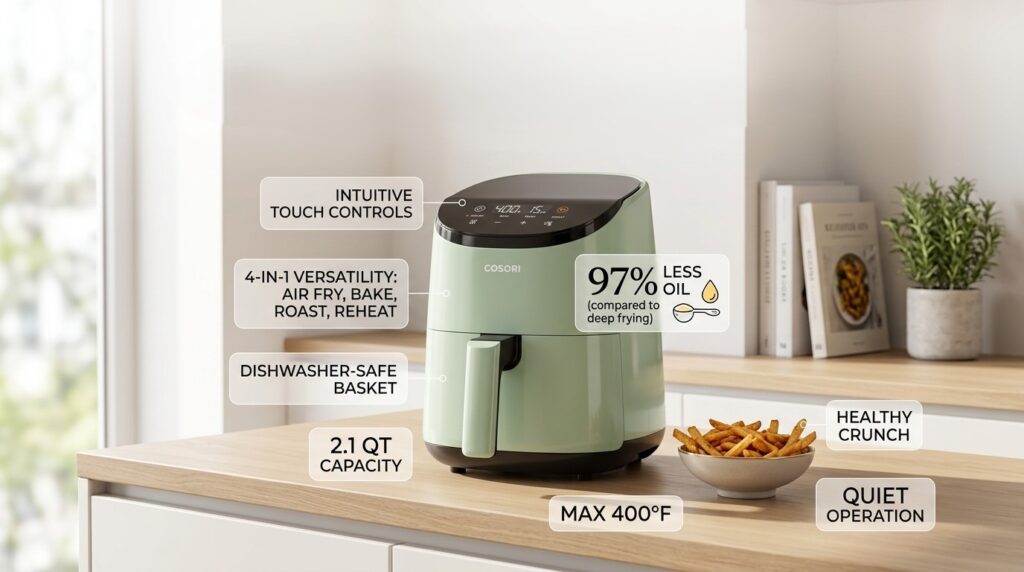
The term “4-in-1” refers to distinct cooking modes: air fry, bake, roast, and reheat. Each function adjusts air circulation and heating patterns to suit different cooking needs.
Air Fry mode uses high-velocity hot air circulation to crisp foods with minimal oil. This is the signature air fryer function and what most people associate with the appliance.
Bake mode creates an environment suitable for breads, pastries, and cakes. Rather than high-speed air circulation, bake mode distributes heat more evenly and consistently, though the exact implementation varies by model.
Roast mode falls somewhere between air fry and bake, using moderate heat circulation suitable for vegetables, proteins, and foods that benefit from browning without aggressive crisping.
Reheat mode gently warms previously cooked foods while attempting to restore texture that might otherwise be lost in a microwave. This function typically uses lower temperatures and gentler air circulation.
Oil Reduction Claims
The specification noting “97% less oil” compared to traditional deep frying refers to the reduced amount of oil required when using an air fryer versus methods like pan-frying or deep-frying. This comparison is accurate but worth contextualizing. Air fryers still benefit from a light oil coating on many foods—most recipes call for 1-2 teaspoons of oil rather than the cups required for traditional frying. The foods cook by hot air circulation rather than immersion in oil, which changes both the cooking dynamic and the final texture.
The practical implication is that air fryers enable foods traditionally associated with deep frying—crispy fries, fried chicken, breaded items—while using dramatically less oil. Whether this translates to meaningfully fewer calories depends on the specific foods and recipes being prepared.
Build and Control Elements
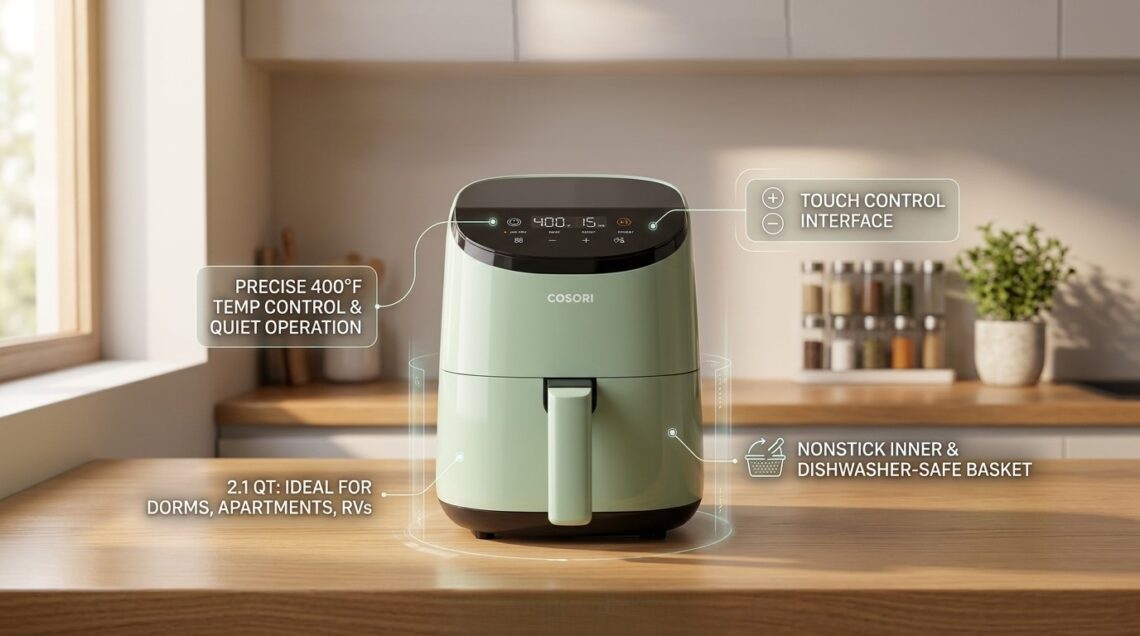
Touch control interfaces have become standard on modern air fryers. This model features a touch control system that typically allows temperature adjustment in 5-degree increments and preset time settings. Touch controls are generally intuitive, though they do require a clean screen to function properly, which is a minor maintenance consideration for kitchens with frequent use.
The nonstick interior basket reduces food sticking and facilitates cleanup. Nonstick coatings do wear over time with repeated use and cleaning, particularly if sharp utensils are used. The specification that the basket is dishwasher-safe is significant for maintenance, as hand washing nonstick surfaces typically extends their lifespan.
Design and Aesthetic Considerations
The green color option represents a departure from typical kitchen appliance neutrals like black or stainless steel. Color choice is ultimately personal preference, though it’s worth noting that colored appliances are visible on counters and may or may not coordinate with existing kitchen elements.
Noise Profile
The notation that this model runs quietly is worth examining. Air fryers produce noise from fan motors and heating elements. Most compact models operate in the 60-75 decibel range during cooking—roughly equivalent to normal conversation or a washing machine. Whether this qualifies as “quiet” depends on individual sensitivity and expectations, but compact models generally produce less noise than larger units due to smaller fan motors. For dorm residents or those in close quarters, even modest noise reduction matters.
How Compact Air Fryers Fit Into Daily Cooking
Weeknight Dinner Preparation
Compact air fryers excel at streamlining weeknight cooking. Proteins can be seasoned and cooked in 15-20 minutes, vegetables roasted simultaneously in a separate batch, and everything finished while still maintaining a warm temperature due to residual heat. This differs from traditional oven cooking partly in speed—the smaller chamber preheats faster—and partly in the specific texture outcomes, particularly crisping and browning.
For a person or couple cooking dinner on a schedule, the ability to prepare a complete meal in under 30 minutes (including prep) makes a meaningful difference in routine feasibility.
Leftover Management
Reheating is where the reheat function becomes genuinely useful. Microwaves warm foods unevenly and can affect texture, particularly with fried or crispy items. An air fryer’s gentle reheat function restores foods closer to their original texture while warming through evenly. Leftover pizza becomes crispy again, french fries regain texture, and breaded items don’t turn soggy or rubbery.
Batch Cooking and Meal Prep
The 2.1-quart capacity limits batch sizes, but this doesn’t preclude meal preparation altogether. It simply means cooking in multiple smaller batches rather than one large batch. For someone planning meals for the week, this approach is feasible though more time-intensive than larger-capacity equipment would be.
Accommodating Dietary Preferences
Households where different people prefer different cooking methods benefit from having a dedicated air fryer. One person might want their chicken breast with minimal oil and a crispy exterior, while another prefers softer preparation. Rather than accommodating multiple cooking approaches in a single meal, individual portions can be prepared according to preference.
Who May Find a Compact Air Fryer Suitable
Students and Dorm Residents
College dormitories typically impose restrictions on kitchen equipment—hot plates, full-size ovens, and multiple large appliances are usually prohibited. Air fryers often fall into a gray area, though they’re generally less controversial than open-flame or traditional stovetop equipment. Their compact size and speed make them valuable for students who want to prepare better meals than standard dining hall or takeout options provide, without violating residency policies.
For a student living on campus, an air fryer can mean the difference between regular fast food meals and home-prepared foods, which affects both food quality and budget allocation.
Apartment Dwellers with Limited Space
Urban apartments, particularly in high-density areas, often feature kitchens designed for basic functionality rather than extensive appliance collections. A compact air fryer occupies minimal counter space—often less than a toaster oven—while providing cooking versatility that justifies the footprint.
Additionally, air fryers generally require less ventilation management than traditional ovens. They don’t generate the same volume of heat that makes kitchens uncomfortable during warm months, which matters in apartments without exceptional climate control.
RV and Mobile Living
People living full-time or extended periods in RVs face specific constraints: limited counter space, power consumption concerns, and practical difficulty with traditional cooking equipment. A compact, efficient air fryer addresses these constraints directly. It requires standard 120V power (unlike some demanding kitchen equipment), uses minimal counter space, cooks quickly (reducing overall power draw for the cooking session), and eliminates the need for multiple specialized cooking tools.
Small Households
Singles and couples cooking for themselves rather than family-sized quantities don’t need large-capacity equipment. A 2.1-quart basket provides adequate space for their actual cooking needs while avoiding unnecessary energy use and counter clutter. The efficiency gains and reduced waste of a right-sized appliance have practical benefits beyond simple convenience.
People with Limited Cooking Skills or Confidence
Air fry, bake, roast, and reheat represent relatively straightforward cooking functions. The technology handles precise temperature maintenance, reducing opportunities for common cooking errors like scorching, undercooking, or uneven results. For someone building cooking confidence or managing multiple competing time demands, having an appliance that simplifies technical execution removes friction from meal preparation.
Important Considerations and Realistic Expectations
Capacity Limitations
A 2.1-quart basket won’t accommodate family meals, large entertaining scenarios, or batch cooking for multiple people. Understanding this limitation upfront prevents frustration from expecting the device to do something outside its design scope. If you regularly cook for four or more people, a larger capacity model might better match your actual needs.
Texture and Taste Outcomes Vary by Food
Air fryers excel with foods that benefit from the crispy-exterior-tender-interior combination: potatoes, chicken wings, certain vegetables, and breaded items. They produce different results with foods that traditionally require moist heat environments like soups or stews. Some foods simply cook better with conventional methods, and recognizing these differences prevents disappointment from expecting a single appliance to optimize all cooking scenarios.
Learning Curve and Recipe Adjustment
Air fryer cooking differs from traditional oven or stovetop cooking in meaningful ways. A recipe written for a conventional oven often requires temperature or time adjustments for an air fryer—sometimes substantial adjustments. This is a learning process rather than something intuitive immediately. Successful air fryer cooking involves experimentation, note-taking, and willingness to adjust based on results.
Space Requirements
While compact relative to larger air fryers, even a 2.1-quart model requires counter space for the unit itself plus clearance above it for steam release. It also needs proximity to electrical outlets. Before committing to this purchase, confirming that adequate space with proper ventilation exists prevents the frustration of receiving an appliance you can’t practically install.
Maintenance and Longevity
Nonstick coatings degrade with use, heat exposure, and aggressive cleaning. Over years of frequent use, the nonstick finish may become less effective, though the appliance remains functional. Replacing the basket after years of use is sometimes more expensive than expected. Understanding that air fryers have functional lifespans of typically 3-5 years with regular daily use helps set appropriate expectations for long-term value.
Compact Air Fryers in Context: How They Compare to Other Cooking Methods
Versus Traditional Ovens
Conventional ovens offer larger capacity and more consistent results for batch cooking, but they require longer preheating times, use more energy, and generate more ambient heat. Air fryers cook faster, use less energy, and are better suited to individual or small-batch cooking. The trade-off is capacity; an oven accommodates far larger quantities.
Versus Toaster Ovens
Toaster ovens and compact air fryers occupy similar kitchen niches in terms of space efficiency. Toaster ovens typically offer larger capacity and can accommodate broader food sizes. Air fryers generally cook faster and produce crisper results due to their specific air circulation design. Some people find both useful for different purposes; others choose one or the other based on their primary cooking patterns.
Versus Microwave Reheating
Microwaves heat foods quickly but often produce uneven results and texture changes, particularly with previously fried or crispy foods. Air fryers’ reheating function produces results closer to the original texture, though it takes longer than microwave reheating. The choice depends on whether you prioritize speed or texture outcome.
Versus Stovetop Cooking
Stovetop cooking demands active monitoring and skill with heat management. Air fryers handle temperature regulation automatically, reducing opportunities for user error. However, stovetop cooking offers precise control over cooking dynamics that some foods benefit from, and handles larger quantities more efficiently. Most households benefit from using both methods for their respective strengths.
Practical Usage Ideas and Applications
Breakfast Applications
Air fryers work surprisingly well for breakfast items. Hash browns and breakfast potatoes achieve excellent texture. Frozen breakfast sandwiches reheat evenly without the soggy bread problems that microwaves create. Some people prepare breakfast burritos or pastries in an air fryer, though results depend on the specific items.
Snack Preparation
Making homemade snacks like flavored popcorn, roasted chickpeas, or vegetable chips in an air fryer requires less oil and monitoring than stovetop approaches. The contained cooking chamber prevents oil splatter and mess.
Protein Cooking
Chicken breasts, thighs, pork chops, and similar proteins cook evenly with browning that produces better texture than poaching or boiling. Cooking times are substantially faster than traditional oven baking—typically 12-18 minutes depending on thickness and internal temperature.
Vegetable Preparation
Brussels sprouts, broccoli, asparagus, and other vegetables caramelize and brown in an air fryer, developing flavor through the Maillard reaction—the chemical process that creates the browned surface. The results differ from steaming (which softens) or stovetop sautéing (which risks sticking or uneven browning).
Frozen Foods
Air fryers handle frozen foods directly without thawing, making them practical for quick meal solutions. Results with quality frozen products are often comparable to or better than microwave or conventional oven approaches.
Frequently Asked Questions
How much counter space does a compact air fryer actually require?
A 2.1-quart model typically occupies a footprint of approximately 8-10 inches wide and 10-12 inches deep. Height varies but usually ranges from 9-11 inches. This is smaller than most toaster ovens and roughly equivalent to a full-size microwave. Ensure adequate clearance above for steam release—typically at least 4-6 inches.
Can you cook multiple items at once in a small air fryer?
The 2.1-quart basket can technically hold multiple food types, but they should cook at similar temperatures and timeframes. Cooking a batch of vegetables and some chicken together works if both are cut to similar sizes. Cooking something that requires 20 minutes alongside something needing 8 minutes requires removing one item partway through.
Is the touch control interface reliable and durable?
Touch controls on modern appliances are generally reliable, though they require a clean, dry screen to register input properly. They don’t have moving parts like buttons that can wear out from mechanical stress. The main maintenance consideration is keeping the control panel clean and avoiding liquid splashing directly onto it during cooking.
How do cooking times in a compact air fryer compare to larger models?
Cooking times are often similar between compact and full-size air fryers for the same foods, sometimes slightly faster in compact models due to more direct heat exposure. The main difference is batch quantity rather than cooking speed.
Is a nonstick basket absolutely necessary?
Nonstick surfaces reduce sticking and facilitate cleanup, but some people prefer stainless steel baskets for durability concerns. The tradeoff is that stainless steel requires more oil on foods to prevent sticking. For most users, nonstick is more convenient for daily cooking.
Can you put the basket in the dishwasher, or does that damage it faster?
Hand washing extends the life of nonstick surfaces by reducing exposure to hot water, harsh detergents, and mechanical stress from dishwasher jets. However, if the basket is labeled dishwasher-safe, using the dishwasher is acceptable—it simply accelerates the wear process that eventually affects all nonstick surfaces.
What’s the actual decibel level, and how does it compare to other kitchen appliances?
Compact air fryers typically operate in the 60-75 decibel range. For comparison, normal conversation is about 60 decibels, a microwave is roughly 70-75, and a blender can reach 85-90. They’re quieter than most traditional ovens and comparable to other standard kitchen appliances.
How long do air fryers typically last?
With regular daily use, most air fryers function adequately for 3-5 years. Nonstick degradation and occasional element failures account for most failures. They often continue working even when nonstick performance declines, though cooking results change. Some units last considerably longer with less frequent use.
Are there safety considerations specific to compact air fryers?
Standard electrical appliance safety applies: keep away from water sources, ensure proper ventilation, never submerge the main unit, and follow the manufacturer’s guidelines. The basket becomes extremely hot during cooking—use provided handles or tongs. Steam released during cooking can cause burns, so maintain distance during operation.
Conclusion
Compact air fryers serve a specific purpose in modern cooking: they provide convenient, efficient cooking for individuals and small households without demanding significant counter space or large time investments. The 2.1-quart capacity, 400°F maximum temperature, and four cooking functions create a functional appliance suitable for common cooking tasks—everything from roasting vegetables to reheating leftovers.
Whether a compact air fryer suits your cooking needs depends on realistic assessment of your actual cooking patterns, kitchen space, and household size. For students living in dorms, apartment residents with limited kitchens, people in RVs, and singles or couples cooking for themselves, the advantages often outweigh the limitations. For larger households or people who regularly cook for groups, a larger capacity model would better serve their needs.
The key to satisfaction with any appliance is matching it to your genuine requirements rather than aspirational cooking scenarios. Understanding what a 2.1-quart capacity actually represents in daily use, recognizing which foods perform well in this cooking method, and accepting the learning curve involved in mastering new cooking techniques create the foundation for getting real value from the investment.