Introduction
The air fryer revolution has transformed home cooking over the past decade, shifting from a novelty gadget to a legitimate kitchen staple for many households. However, not every kitchen has the counter space or family size to justify purchasing a large air fryer oven. This is where compact, basket-style air fryers fit into the picture—offering the core benefits of air frying technology in a footprint that suits smaller living spaces and cooking needs.
The rise of single-person households and couples living together has created real demand for kitchen appliances that don’t dominate counter space. A 2.6-quart air fryer represents a sweet spot for many people: substantial enough to prepare meals for one or two people without significantly scaling recipes, yet small enough to store in a cabinet or tuck into a corner of a modest kitchen. Understanding how this category of appliance works, what it can realistically do, and whether it makes sense for your lifestyle is worth exploring before making a purchasing decision.
What Is a Basket-Style Air Fryer?
Before diving into the specifics of any particular model, it helps to understand what distinguishes basket-style air fryers from their larger counterparts. These compact units feature a removable basket that sits directly below a heating element, allowing hot air to circulate around food quickly and efficiently. This design is fundamentally different from larger air fryer ovens, which have more vertical space and often accommodate trays or racks.
The basket approach has genuine advantages for smaller households. The airflow path is shorter and more concentrated, which means preheating happens quickly and cooking times tend to be faster than in larger units. The compact size also means you’ll use less counter real estate—a consideration that matters in apartments, RVs, dorm rooms, or any kitchen where every square foot counts.
Key Features and Design Elements
Capacity and Dimensions
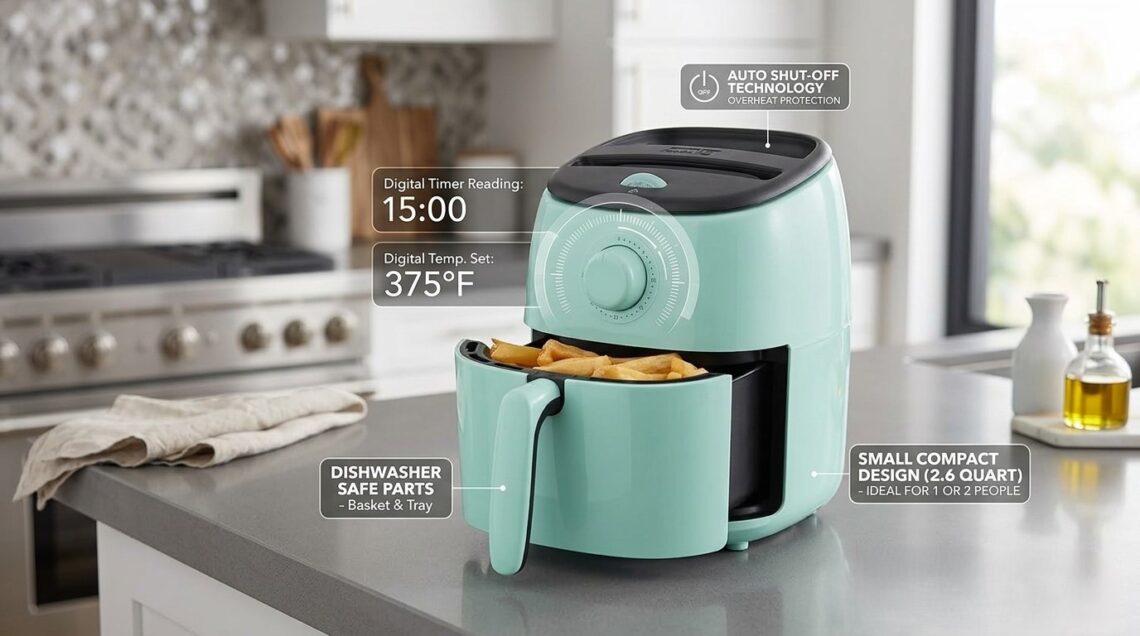
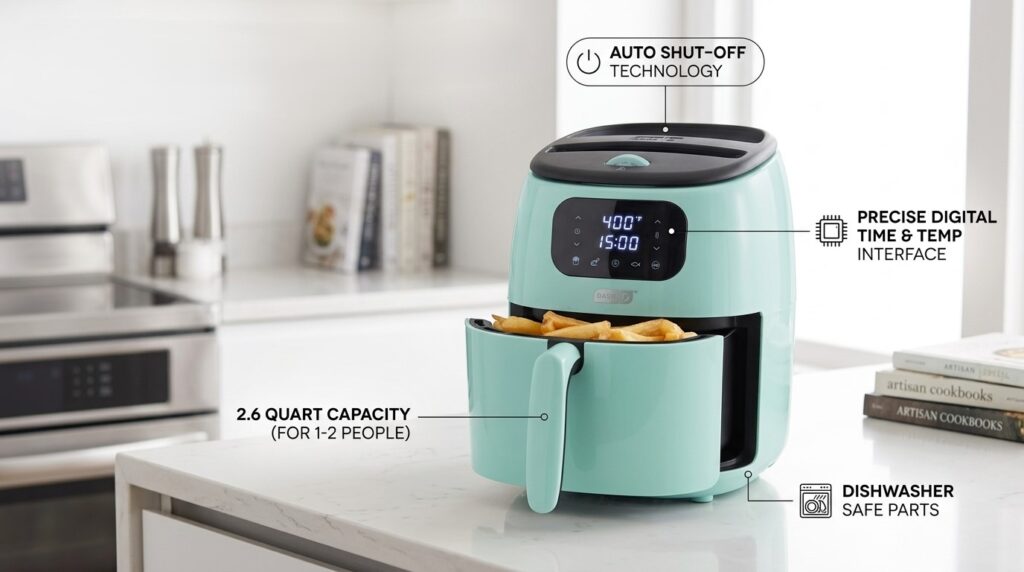
A 2.6-quart capacity sits at the lower end of the air fryer spectrum, which directly impacts how you’ll use the appliance. This volume is genuinely sufficient for two chicken breasts, a serving of fries, a batch of wings, or several pieces of vegetables, but it’s not intended for meal prep in bulk. If you’re cooking for yourself most nights or occasionally for two people, this capacity handles typical portions comfortably. If you regularly cook for four or more, this size would require multiple batches, which changes the equation.
The compact physical footprint matters practically. Most small apartments have limited counter space, and some people prefer not to leave appliances out permanently. A smaller air fryer is easier to relocate or store, making it more practical for those who value flexibility.
Dial Controls and User Interface
Modern air fryers range from having minimal controls to sophisticated digital interfaces with preset programs and app connectivity. A model featuring easy dial controls takes a different approach—one that prioritizes simplicity over automation. Dial-based operation means manually setting your temperature and time, which requires you to know at least roughly what settings work for what foods.
This straightforward control method appeals to certain users: those who prefer not to navigate digital menus, people who want to understand exactly what their appliance is doing, or anyone who finds overly complex interfaces frustrating. Conversely, someone who enjoys preset cooking programs for convenience might find manual dials require more active attention.
Auto Shut-Off Function
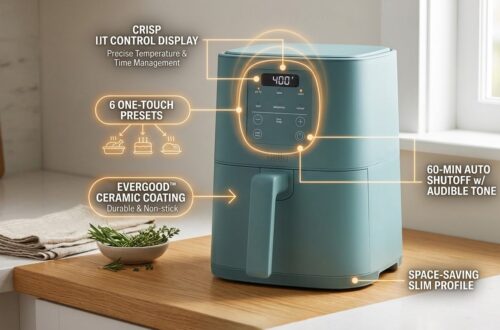
An automatic shut-off when the cooking timer expires is a safety feature that prevents food from overcooking if you get distracted. This is standard on modern air fryers and prevents the scenario where you forget about your cooking and end up with charred results. It’s a simple feature but a genuinely practical one, especially on weeknight cooking sessions.
Dishwasher-Safe Components
The removable basket and any other dishwasher-safe parts dramatically affect the appeal of an air fryer for busy people. Hand-washing food splatters from a small basket after cooking fries or chicken can feel tedious. Having the option to place these components in the dishwasher significantly reduces the friction around using the appliance regularly. Over months of use, this convenience factor accumulates.
How This Type of Air Fryer Can Be Used
Proteins and Proteins-Centric Meals
Air fryers excel at cooking proteins quickly while maintaining moisture and texture. Chicken breasts, pork tenderloin slices, salmon fillets, and shrimp all cook well in a compact basket. The small volume means these items are surrounded by intensely circulating hot air, creating evenness without the need to flip multiple times. Someone preparing a weeknight dinner can have protein ready in 12-20 minutes, depending on thickness and starting temperature.
Ground meat preparations like meatballs or small burger patties also work well, and some people use their air fryers for this purpose more frequently than anything else. The cleanup after cooking ground meat in an air fryer is notably easier than cleaning a traditional skillet.
Vegetables and Sides
Vegetables often benefit from air frying because the intense, dry heat creates crispy exteriors while keeping interiors tender. Broccoli, Brussels sprouts, asparagus, and even fresh vegetables tossed in minimal oil develop pleasant caramelization. A 2.6-quart basket holds a full serving of roasted vegetables for two people comfortably. Some people find that vegetables cooked this way taste different enough from oven-roasted versions that they actively prefer the air fryer method.
Root vegetables like potatoes require longer cooking times, but a small batch of breakfast potatoes or twice-baked potato filling is entirely practical.
Breaded and Fried Foods
The reason air fryers gained initial popularity was their ability to recreate crispy fried textures without deep frying. Frozen items like chicken nuggets, fish sticks, or frozen fries cook in minutes with substantially less oil than traditional methods. Fresh breaded items—homemade cutlets, fritters, or vegetable fritters—also benefit from this cooking method.
For people trying to reduce their fried food consumption while not eliminating it entirely, an air fryer makes the occasional crispy treat feel less guilt-laden and requires significantly less effort than traditional frying.
Baked Goods and Smaller Items
Less commonly discussed, but worth noting: small air fryers can successfully bake items like muffins, small cakes, or individual-sized bread servings if you use appropriate cookware that fits in the basket. This requires some experimentation and understanding your specific unit’s hot spots, but it’s genuinely possible. People living alone or in pairs often find that making full-sized batches of baked goods results in waste, so the ability to bake smaller quantities appeals to them.
Reheating and Reviving Leftovers
Air fryers reheat many foods better than microwaves. Yesterday’s pizza, fried chicken, or french fries regains much of their original texture when warmed in an air fryer. This quality-of-life feature often gets overlooked but influences how frequently people use their units.
Who This Appliance May Be Suitable For
Solo Dwellers and Couples
The most obvious audience for a compact air fryer is someone cooking regularly for one or two people. The capacity matches typical portion sizes without the need to constantly scale recipes or make substantial batches. A solo person who doesn’t enjoy eating the same meal repeatedly finds that an air fryer makes cooking just enough for one person feel efficient rather than wasteful.
Apartment and Small Space Residents
Anyone living in a dorm, apartment, or small house where counter and storage space is genuinely limited benefits from the compact footprint. These air fryers solve the problem of wanting air fryer functionality without requiring a permanent counter installation in a space where every inch matters.
People Learning to Cook
The straightforward operation of a dial-controlled, non-digital air fryer makes it accessible for people building cooking confidence. There’s less to figure out, fewer settings to misunderstand, and results are often forgiving. Someone who’s intimidated by cooking can successfully prepare roasted vegetables, simple proteins, and other basics without needing to troubleshoot complex menus.
Minimalists and Intentional Consumers
Some households deliberately keep fewer appliances, viewing each addition as something that needs to earn its place. A compact air fryer occupies less physical and mental real estate than a full-sized model, making it easier to justify keeping it around.
People with Limited Kitchen Capabilities
In kitchens where oven space is limited, shared, or unreliable—such as some rental situations—an air fryer provides an alternative cooking method that doesn’t depend on having access to a functional oven. RV owners and people living in temporary housing situations often find compact appliances particularly valuable.
Important Things to Consider
Capacity Limitations
The most significant limitation is straightforward: 2.6 quarts is relatively small. If you regularly cook for three or more people, make large meal batches, or entertain frequently, this size creates genuine constraints. Cooking multiple batches isn’t impossible but does change the workflow and increases total cooking time. Understanding your typical serving size is essential before committing to this capacity.
Temperature Range and Versatility
Different foods require different temperatures and timing. A dial-controlled model requires you to research or remember what settings work for your preferred foods. Unlike models with preset programs, you’ll need to know that chicken needs roughly 380-400°F for 12-15 minutes depending on thickness, or that vegetables cook well at 375°F. This isn’t complicated, but it does mean the appliance requires a small learning curve.
Non-Stick Coating Durability
Most air fryer baskets use a non-stick coating to facilitate easy food removal and cleanup. These coatings have limited lifespans. Depending on usage frequency, care taken, and the quality of the specific coating, durability varies. Aggressive scrubbing, metal utensils, and extreme temperatures can degrade non-stick surfaces. Understanding proper care—typically involving soft utensils, hand-washing or careful dishwasher loading, and avoiding excessive heat—helps extend the lifespan.
Learning Your Unit’s Hot Spots
Every air fryer has slight variations in how evenly it circulates heat. Some areas near the element may brown faster than others. Learning your specific unit’s quirks—where it runs hotter, whether you need to shake food halfway through, how aggressively it cooks at different settings—takes a few cooking sessions. This personalization is normal and not a flaw, but it does mean initial results might not be perfect.
Ventilation and Heat Emission
Air fryers release heat and moisture while operating. They need clearance around them—at least a few inches from walls or cabinets—to operate safely and maintain performance. If your planned location has minimal ventilation or you need to place it immediately under cabinets, this creates practical issues.
Compact Air Fryers in Context: How They Compare
Small Air Fryers vs. Larger Air Fryer Ovens
Larger air fryer ovens (typically 6-10 quarts) offer substantially more capacity, making them better for families or batch cooking. They heat more slowly but maintain heat better with larger loads. The trade-off is that they require significantly more counter space and take longer to preheat. For single people or couples, this extra space and capacity often goes unused, making a compact model more practical.
Compact Air Fryers vs. Traditional Ovens
A regular oven offers more capacity and flexibility but requires longer preheating and uses more energy. Air fryers cook faster and more energy-efficiently for small quantities, but they can’t accommodate large sheet pans or multiple racks of food simultaneously. For someone cooking small quantities regularly, an air fryer is substantially faster and more convenient.
Compact Air Fryers vs. Stovetop Methods
Pan-frying or sautéing vegetables uses less equipment and generates less heat than an air fryer. However, air frying uses significantly less oil and creates different texture outcomes. Some foods—particularly frozen items and certain vegetables—genuinely benefit from air frying’s specific heat distribution method.
Manual Dials vs. Digital Controls
Air fryers with digital touchscreens and preset programs offer convenience and consistency if you cook the same items repeatedly. Models with simple dial controls put the responsibility for time and temperature selection on you but offer transparency and simplicity. Neither approach is objectively better; the right choice depends on whether you prefer simplicity or automation.
Frequently Asked Questions
How long does it take to preheat a compact air fryer? Most small air fryers preheat to 375-400°F in 3-5 minutes, noticeably faster than traditional ovens. Some models reach operating temperature in just 2-3 minutes. The size and power of the heating element influence this, but speed is generally one of the benefits of the compact design.
Can I use this air fryer in an RV or while traveling? Yes, compact air fryers work well in RVs, boats, or temporary housing, provided there’s electrical access and ventilation. The small footprint makes storage and setup practical for mobile living situations.
What’s the learning curve for using manual dial controls? Minimal, for most people. You need to know approximately what temperature and time work for items you cook regularly, but this knowledge develops quickly through trial and error. Keeping a small note card with your preferred settings eliminates needing to remember them.
Is hand-washing the basket really that much harder than using a dishwasher? It depends on what you cook and how often. Greasy items require some scrubbing either way, but hand-washing a single small basket takes roughly 2-3 minutes. Whether this matters depends on your priorities and household dishwasher access.
How often do non-stick coatings actually wear out? With normal care, most non-stick coatings remain functional for 2-3 years of regular use. Some last much longer. Proper care—avoiding metal utensils, not using excessive force cleaning, and not exposing to extreme temperatures—extends lifespan considerably.
Can I prepare multiple items simultaneously, like vegetables and protein? Yes, if they don’t touch and require the same temperature and timing. For items with different cooking times, you’ll need to add faster-cooking items partway through. This works but requires attention and planning.
What’s the actual energy consumption compared to using an oven? Air fryers use roughly 50-70% less energy than conventional ovens for equivalent cooking tasks, partly because they heat and cook faster. The actual difference depends on how full you run your oven and how often you use it.
Is the compact size significantly limited for any common foods? Whole chickens or large roasts won’t fit, and bulk batch cooking is impractical. For most other common foods prepared in single or double portions, the size is adequate. Context matters—someone baking regularly for a family would find this limiting; someone cooking for themselves wouldn’t.
What accessories do compact air fryers typically need? Most work well with just the basket and tray that come included. Some people add accessories like silicone liners, stacking racks for double-layer cooking, or parchment-style air fryer liners, but these are optional enhancements rather than necessities.
Conclusion
A compact 2.6-quart air fryer represents a particular solution for a particular problem: how to access air frying technology efficiently if you live alone, with one other person, or in a small space. It’s not a solution that makes sense for everyone, and it shouldn’t be purchased if your cooking patterns require feeding larger groups or making substantial batches regularly.
However, for the person or couple evaluating whether an air fryer fits their lifestyle, a compact basket-style model deserves consideration. The quick cooking times, energy efficiency, and straightforward operation create genuine daily value for many households. The dial controls keep things simple, the smaller capacity matches realistic portion sizes, and the dishwasher-safe components reduce the friction around regular use.
Understanding how to use the appliance—what foods it handles well, what temperature and timing work for your preferences, and how to maintain it properly—matters more than the specific brand or model. Any competent compact air fryer will produce similar results if used correctly.
If this type of appliance aligns with your lifestyle and cooking patterns, it’s worth exploring further. You can check more details on Amazon here if you’d like to see current specifications and options available.